On this page
Your launch is next week. You've got Reddit open in one tab, Google in another, Hacker News in a third, and three niche forums you found this morning. Every thread looks like it could matter, and none of them tells you where your hour will turn into a conversation.
That's the problem with most community outreach tools. The label covers three different jobs, and vendors rarely say which one they're selling you. Some tools only listen for mentions and leave the replying to you. Some help you engage in public threads that already exist. Others ask you to host a community and hope people show up.
This guide sorts ten tools by that job, not by feature count. Each entry covers price, the best use case, and who should skip it. If you're still mapping how those jobs fit together, building engaged startup communities is a useful primer on sequence. Don't buy a hosting platform when you need leads this month. Don't buy a keyword alerter when you need a place for customers to talk to each other.
1. Bazzly
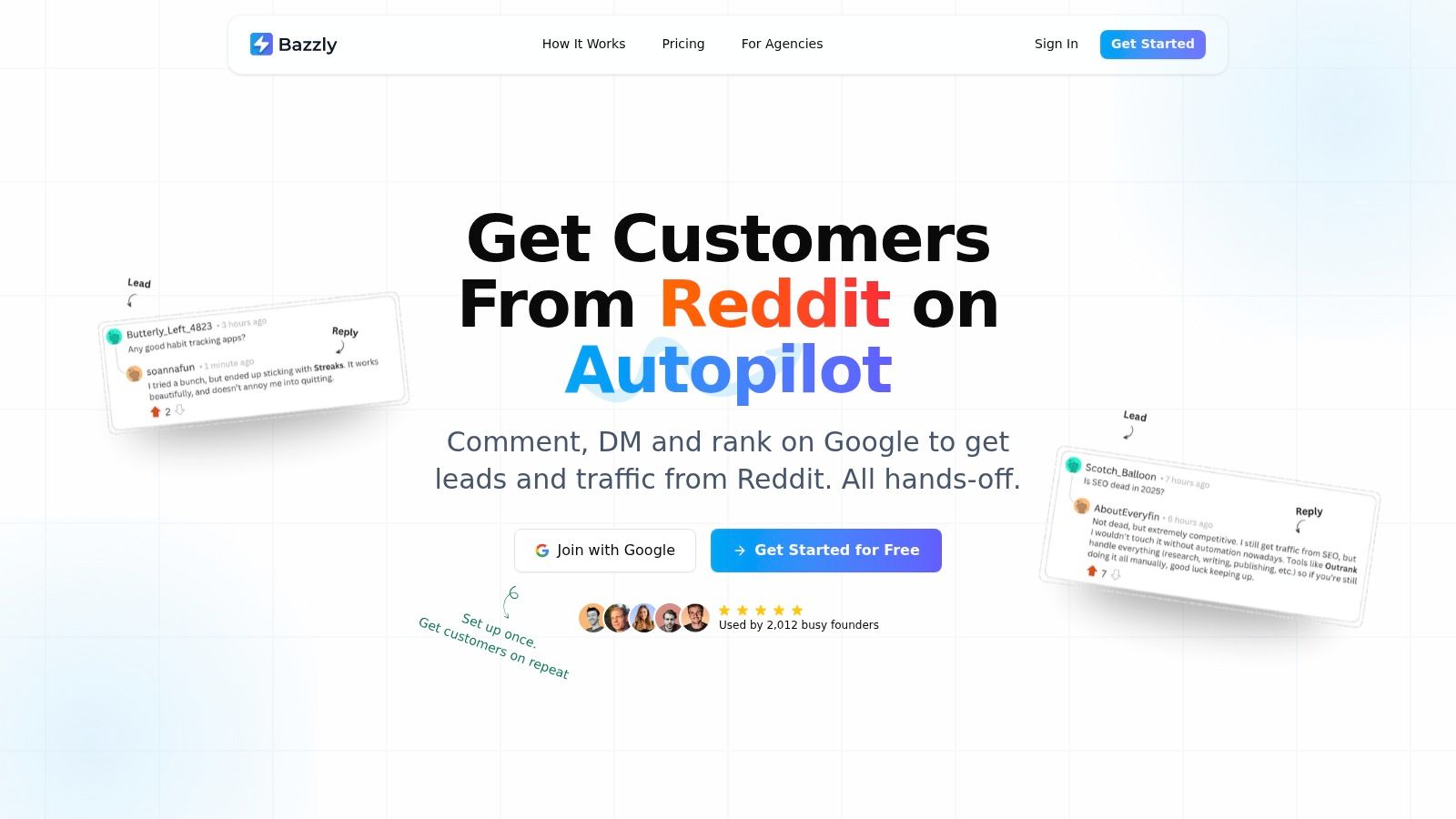
Reddit is the one platform where buyers describe their problem out loud before they ever search for a vendor. Bazzly is the engaging in public threads entry, and it's narrow by design. It scans the subreddits you choose around the clock, scores new posts for relevance and buying intent, and surfaces older threads that already rank on Google or get cited by AI assistants. An opportunity is a post worth replying to in public. A lead is the person who wrote it, surfaced for a private DM.
For each opportunity you get a context-aware draft. Post it yourself through the free Chrome extension, or have it posted from a warmed-up account. Autopilot can find, draft, post and add optional upvotes at a daily pace and relevance threshold you set. Only posts scoring above your project's Minimum Fit Score reach the Opportunities page, and the default is 80%. Brand Signals tracks mentions of you and competitors, with sentiment, for the last 30 days.
What it costs and where it stops
Pricing is $199 per month per project, including 170 credits, with a 7-day free trial and extra credits at $1 each. A warmed-account comment costs 10 credits and an upvote 0.2 credits. If a warmed-account comment gets removed within 48 hours, the credits come back automatically, except in subreddits strict on promotion where you chose to post anyway. Finding opportunities, leads and brand signals is free to start, so you can judge the post quality before paying.
Practical rule: Set the relevance threshold high for the first week. Ten good replies beat fifty weak ones that moderators remove.
It's wrong for you if your buyers aren't on Reddit, or if you need a native Slack or CRM integration, since there isn't one. There's an API and MCP server, but that's a builder's workaround, not a sales workflow. It's also too much money for a pre-revenue side project testing an idea. Pay for it when one or two customers a month cover the subscription.
2. Syften
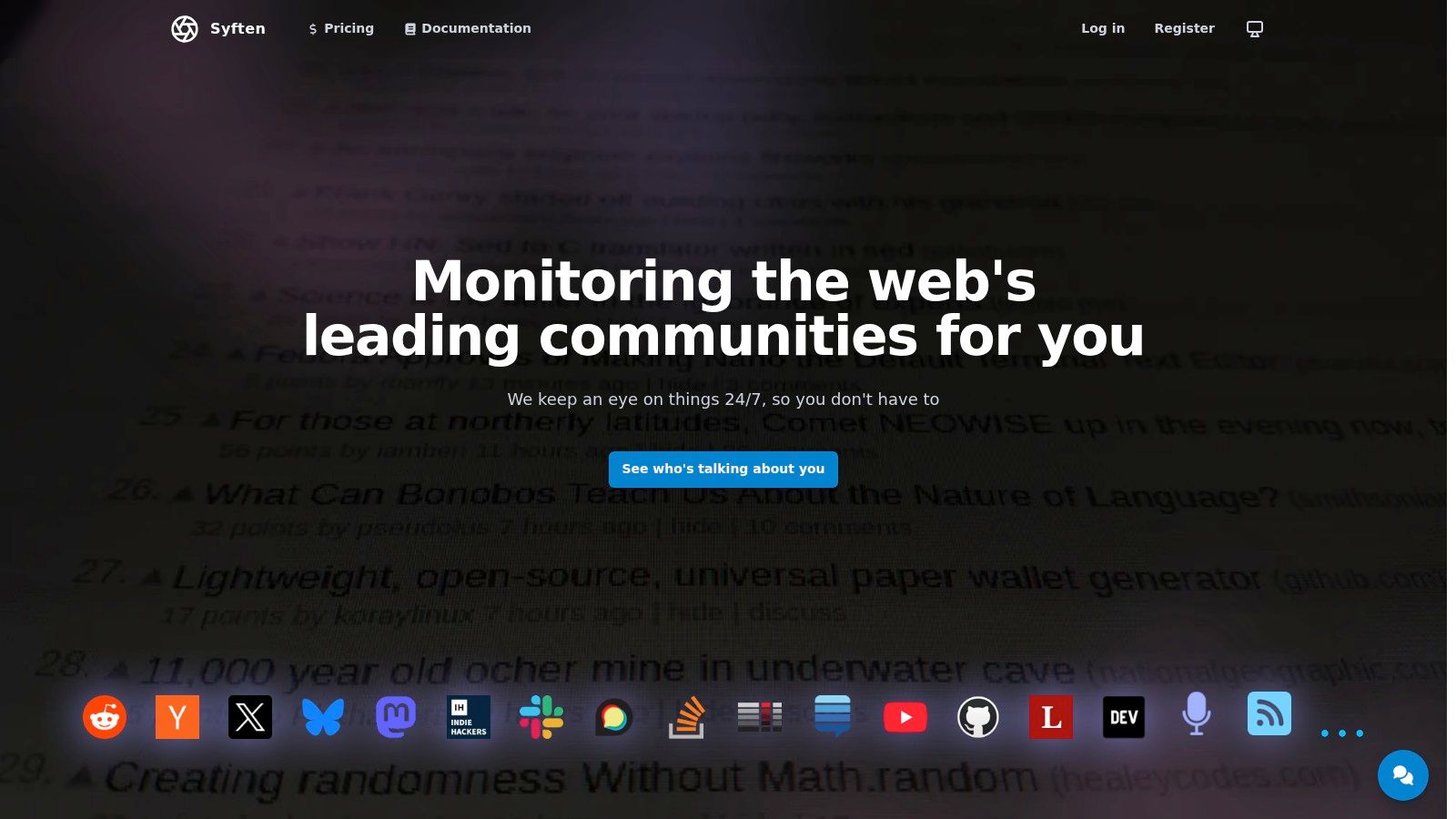
Syften is a listening tool. It watches Reddit, forums, Hacker News, Indie Hackers, GitHub, and public Slack communities for your keywords, then sends Slack alerts so you don't have to patrol each site yourself. Historical search helps you check whether a phrase has been coming up for months or just spiked this week.
Higher tiers add AI filtering, an API, webhooks, and MCP access. That filtering matters, because raw keyword matches include a lot of noise. If you're comparing listening layers more broadly, this overview of social listening software maps how alerting differs from full engagement.
Plans are Standard at $49.95 per month and PRO at $119.95 per month, with a 14-day trial and no credit card required. That's fair for a small team tracking a product name, two competitors, and a category phrase across several communities.
- Buy it if: Your buyers spread across multiple forums, not just one platform.
- Skip it if: You want drafts or posting help. You still read every thread, judge intent, and write the reply yourself.
- Watch for: Result and filter limits vary by plan, so test your noisiest keyword during the trial.
For a solo founder tracking three phrases, it may be more than you need. For an agency watching several clients, the coverage earns its keep.
3. F5Bot
Say you only care about five exact phrases. Your product name, a competitor, and the problem your buyers describe in their own words. F5Bot does that one job and doesn't pretend to do more.
It monitors Reddit, Hacker News, and Lobsters across posts and comments, then alerts you when a phrase appears. Paid tiers add faster alerts, feeds, Slack or Discord delivery, and AI filtering. Setup is minutes, not an onboarding call. If speed is your main question, compare how alerts for Reddit differ by latency and delivery channel before you pay.
There's a free plan, then Silver at $12.99 per month and Gold at $49.99 per month. Start free. You'll know within a week whether your keywords produce real conversations or just noise.
The honest limits
Exact matching misses paraphrases. Someone describing your problem without your exact words won't trigger an alert. Popular terms do the opposite and flood you. There's no CRM, no drafting, no scoring of buying intent. You're the scoring engine.
That's fine at low volume. It breaks when you're getting dozens of alerts a day and can't tell which three deserve a reply. At that point you're not short on alerts. You're short on triage.
4. Common Room
Common Room sits upstream of outreach. Common Room is go-to-market infrastructure: it merges community and social signals with contact and account data, then pushes priority accounts into a CRM so reps know who to contact next.
That category is built around cloud sync and integrations. DataIntelo's advocacy and engagement software market report estimates cloud deployment at 71.4% of deployments in 2025, which helps explain why routing quality matters more than another alert feed. For the wider tool map, see this breakdown of community marketing software; the consumer counterpart is AI community management for DTC brands.
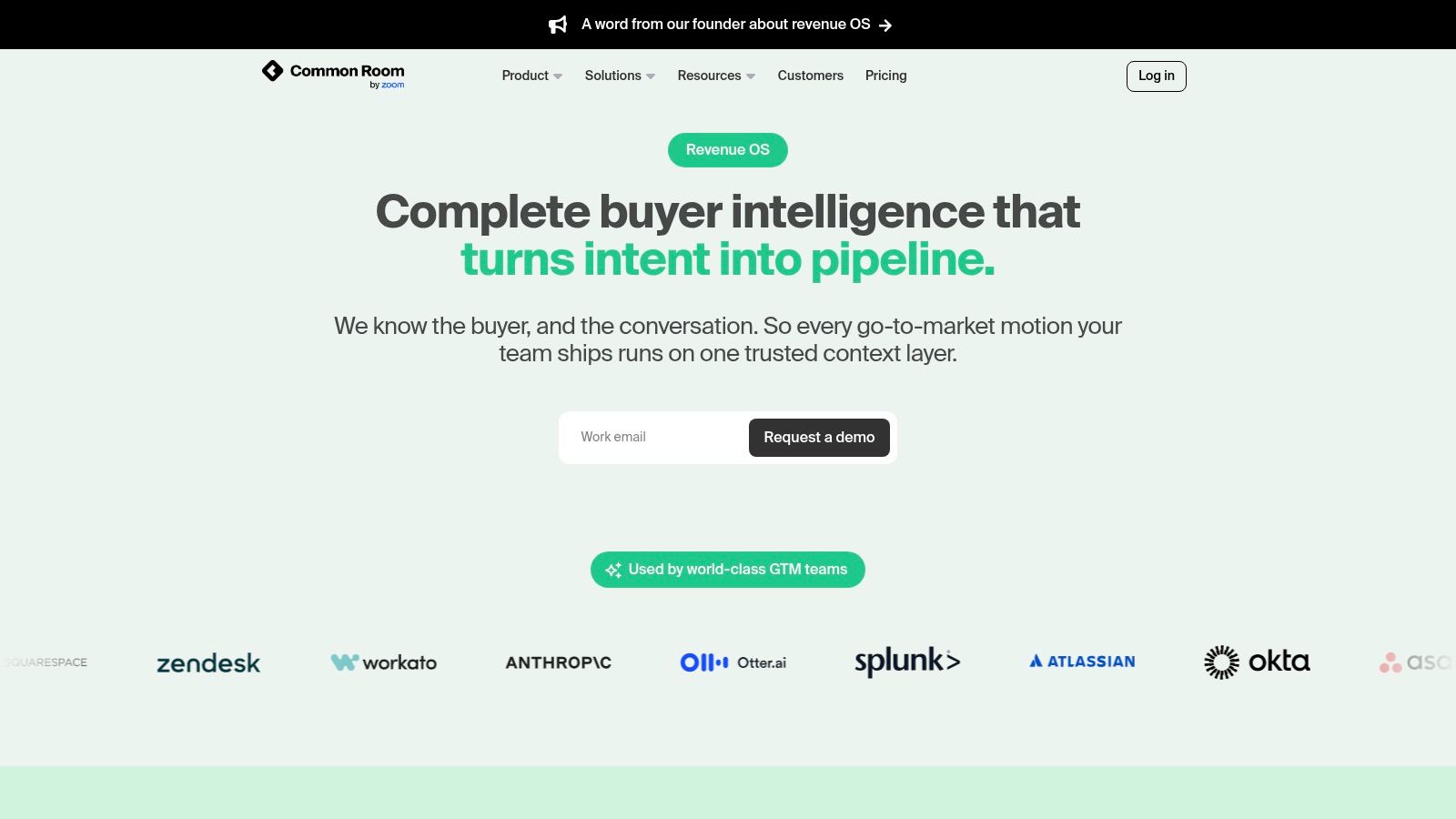
Pricing is custom rather than a simple self-serve tier. Alerts, workflows, audience segments, and sales integrations pay off only when community signals already feed a pipeline with owners and follow-up.
Skip it as a solo founder or early team without CRM discipline. You would be buying routing before you have volume worth routing.
5. Sprout Social
You already run three social profiles and your inbox is the mess. That's the scenario Sprout Social is built for. It's social media management first, with a consolidated inbox, publishing, keyword and location monitoring, tagging, and reporting across supported networks.
Collaboration is the strength. Teammates can assign, tag, and coordinate replies instead of two people answering the same mention. Higher tiers add stronger analytics and social care workflows. For a marketing team where outreach is one part of a daily social operation, that consolidation reduces tab switching.
Pricing on annual billing is $199 per seat per month for Standard, $299 for Professional, and $399 for Advanced, with a 30-day trial. Per seat math gets expensive fast. Three seats on Professional cost more than most early stage teams spend on their whole stack.
If community outreach is your only job, you're paying for a publishing suite you won't use. Buy it for the inbox and reporting, or don't buy it.
It's also the wrong shape for specialist Reddit lead discovery. Supported social networks are its center of gravity. It'll help you manage conversations on profiles you own. It won't score a subreddit thread for buying intent.
One more caution as automation enters these workflows. The 2025 NTEN Data Empowerment Report found more than 79% of nonprofit respondents identified staff time as a data collection challenge, yet only about 35% offered an opt-out form. Whatever you choose, set consent, opt-out, and human review before you automate replies.
6. NationBuilder
NationBuilder changes category entirely. This is organizing software for campaigns, advocacy groups, and membership organizations. You get a people database with segmentation, a website, email, events, donations, petitions, surveys, and volunteer signup pages in one system.
That breadth is the point. A campaign doesn't need five disconnected tools when a supporter signs a petition, donates, and volunteers in the same week. Public pricing helps too. Starter is $34 per month and Pro is $160 per month, Enterprise is custom, and a 14-day trial covers Starter and Pro. If you're weighing it for field work, compare canvassing platforms for campaigns before you commit your contact list.
- Best for: Building and coordinating a supporter base you already intend to mobilize offline and online.
- Not for: SaaS customer acquisition. There's no thread discovery, no intent scoring, no public conversation monitoring.
- Budget warning: Add-ons and contact capacity push costs above the headline price.
Configuration takes real time. The database, action pages, and automations only pay off if someone owns data hygiene. For a founder hunting first customers, that's overhead with no pipeline attached.
7. Bonterra Mobilize
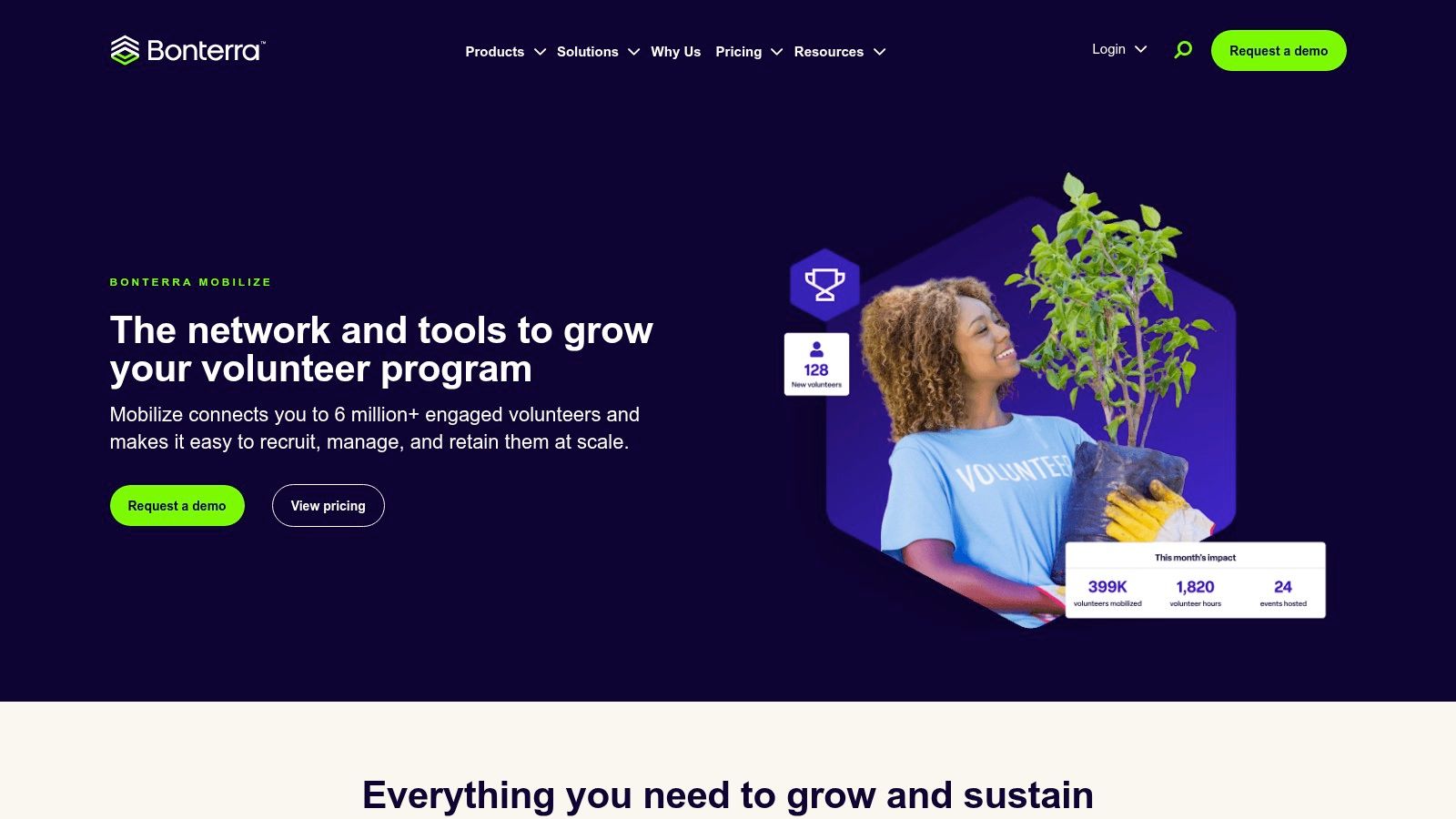
Bonterra Mobilize recruits and coordinates volunteers for nonprofits, unions, and advocacy organizations. Event creation, shift scheduling, automated reminders, self check-in, and volunteer hour tracking live in one place. Integrations include Salesforce and Zapier.
Its network can also promote your events to potential volunteers beyond your own list. That's a genuine advantage when your list is small and you need bodies for a Saturday canvass or a phone bank. Digital delivery is now core to that work, not an add-on. A 2022 report covered by Forbes on nonprofit digital transformation found 65% of interactions between nonprofits and beneficiaries occurred digitally.
Pricing isn't presented as a simple self-serve plan. You're directed to request a demo or pricing, and details vary by offer. That alone tells a solo founder this isn't built for quick self-serve testing.
Who should skip it
Anyone doing commercial community outreach. It's excellent at filling shifts and reminding volunteers. It doesn't find customers in public threads, monitor competitors, or host ongoing discussion. Judge it on turnout and retention, not clicks.
8. GivePulse
GivePulse manages volunteer and community engagement for nonprofits, universities, and local initiatives. Registration, applications, waivers, event management, messaging by subgroup, surveys, fundraising, and ticketing are bundled together. Higher tiers add API access, reporting, and integrations.
Pricing is transparent, which is refreshing in this category. There's a Basic free option, then annual billing plans at Give Joy $20 per month, Give Together $100 per month, and Give More $170 per month. Listed plans include unlimited volunteers, though admin and subgroup limits vary by tier.
The trap with tools like this is measuring volume instead of representation. Guidance in the 2025 State of Community Engagement Survey from PublicInput stresses anonymity, plain language, and explicit assurance that responses won't affect access to services. Your highest response channel can produce your least representative picture if the same connected supporters answer every survey.
- Use it for: Structured programs where people register, show up, and log hours.
- Don't use it for: Monitoring online customer conversations. That job isn't in the product.
For a campus service program or a city volunteer initiative, it's a sensible, affordable system of record. For a SaaS founder, it's a different universe.
9. Circle
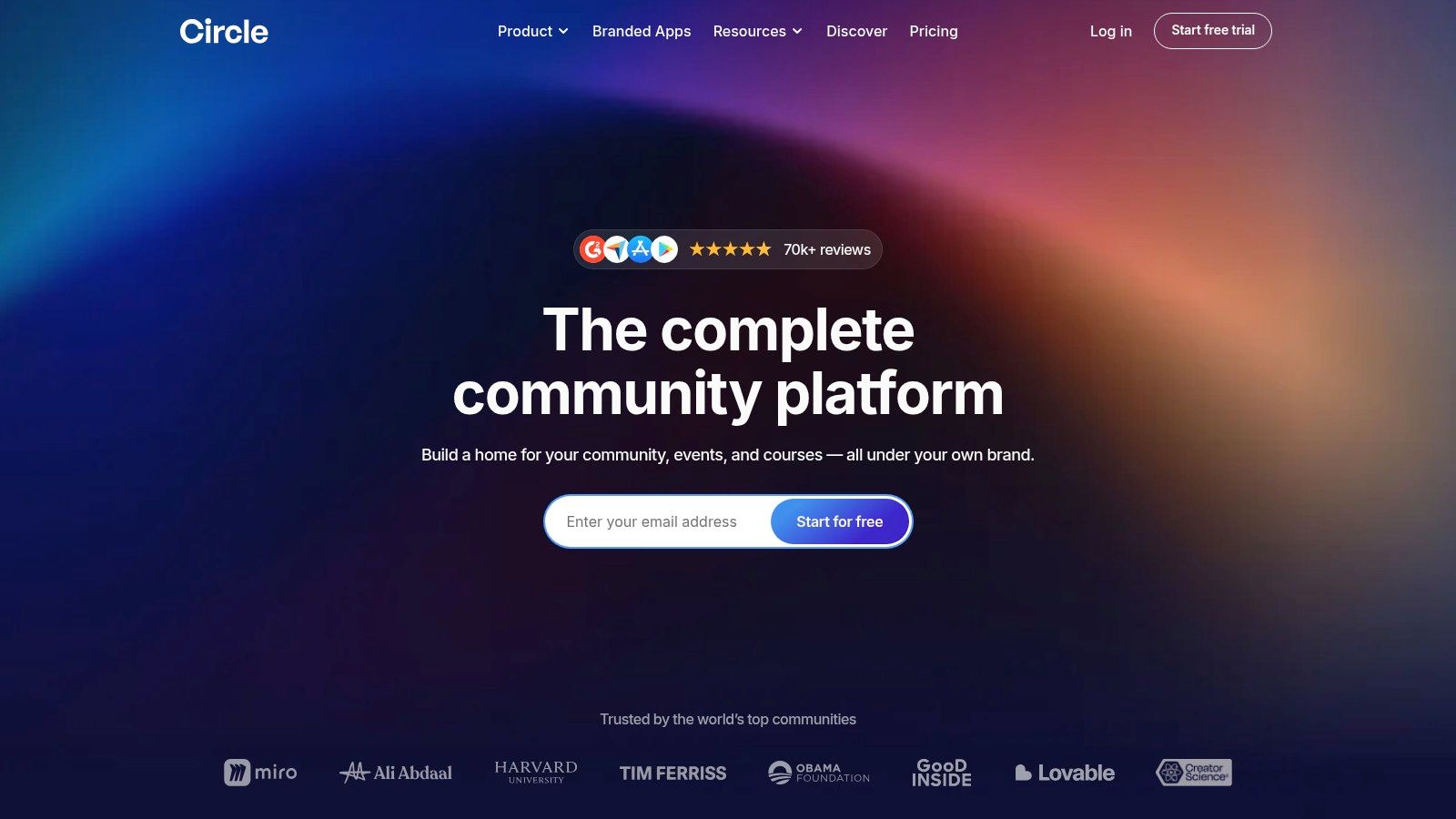
Circle is where the list flips from finding communities to hosting your own. You get branded discussions, events, courses, live sessions, a member directory, profiles, paid memberships, and reporting. You control the experience and the data. You also own the empty room problem.
Professional is $89 per month and Business is $199 per month, with a 14-day trial. Workflows and deeper customization sit on Business. Use the trial to test your exact use case, since user reviews mention limitations and bugs in specific features.
Before you pay: Write down where your first fifty members come from. If the answer is vague, you don't have a hosting problem yet. You have a discovery problem.
Circle makes sense for a creator, course business, or SaaS with existing customers who already ask each other questions somewhere else. Move that energy into a space you own. It doesn't find external outreach opportunities, and it won't create demand. Founders who buy it before they have an audience usually end up posting alone to motivate members who never arrive.
10. Discourse
Discourse is open source forum software. Public and private categories, tags, groups, chat, moderation tools, and searchable threads. The format has a long lineage: Rework's history of social media traces threaded discussion to PLATO Notes in 1973 and dial-up bulletin boards to CBBS in 1978. Forums persist because answers compound. A question solved once keeps helping every visitor who searches for it later.
There's a free plan and a self-hosted open source option. Hosted plans are flat-priced by tier rather than per member, with Enterprise quoted on request, and API and webhook access come with the hosted plans.
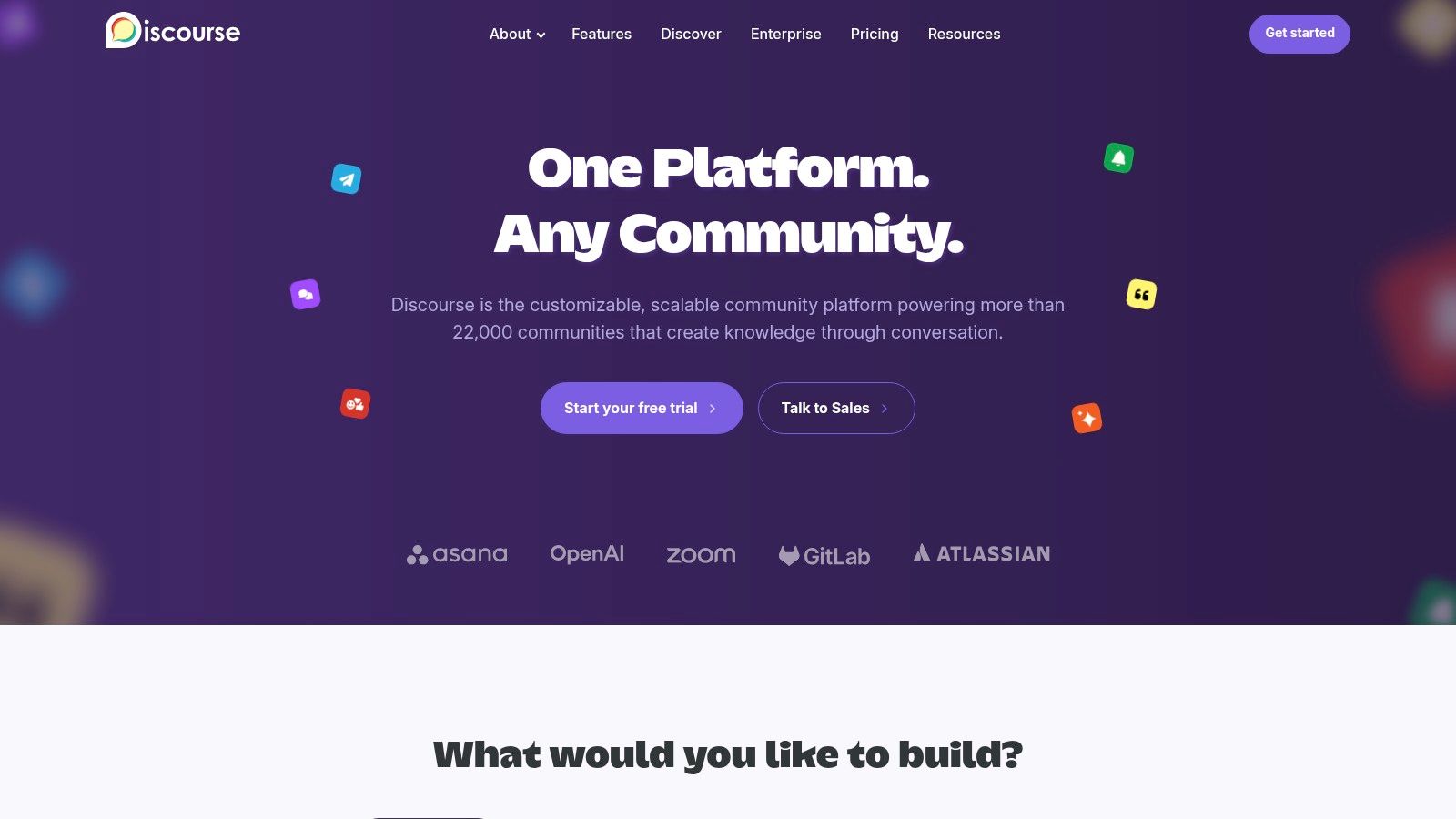
The cost is operational. Self-hosting puts setup, updates, backups, and spam control on your team. Hosted plans remove the server work but not the harder job: seeding threads worth answering, moderating consistently, and keeping the archive useful as it grows.
Pick Discourse when your customers already ask each other technical questions and you want those answers indexed and permanent. It suits developer tools and products with long troubleshooting tails. Skip it when you need pipeline this quarter, because a forum waits for members to arrive and gives you nothing to send outbound.
Starting prices, free options and best-fit use cases for each community outreach tool
| Item | Listed starting price | Free option | Best for |
|---|---|---|---|
| Bazzly | $199/month per project | Free Chrome extension; 7-day trial | Reddit lead discovery and outreach |
| Syften | $49.95/month | 14-day trial; no free plan listed | Monitoring keywords across online communities |
| F5Bot | $12.99/month | Free plan | Simple keyword alerts for Reddit, Hacker News, and Lobsters |
| Common Room | $2,500/month, billed annually | No free option listed | Connecting community signals to go-to-market workflows |
| Sprout Social | $199/seat/month, billed annually | 30-day trial | Managing social engagement and publishing across teams |
| NationBuilder | $34/month | 14-day trial for Starter and Pro | Political campaigns and advocacy organizations |
| Bonterra Mobilize | Custom pricing | No free option listed | Volunteer recruitment and coordination |
| GivePulse | $20/month, billed annually | Basic free option | Managing volunteer and community engagement programs |
| Circle | $89/month | 14-day trial | Hosting a branded online community |
| Discourse | $100/month for hosted Pro | Free plan and self-hosted open-source option | Creating a searchable discussion community |
Match the Tool to the Job Before You Buy
Start by naming the job in one sentence. Listening means you need to know when relevant conversations happen. Engaging means you need help turning public threads into replies, DMs, and customers. Hosting means you already have people and need a place they return to. Most wasted subscriptions come from buying one job and blaming the tool for not doing another.
Run a two week test on one tool per job, not three tools for the same job. Pick your keywords, your subreddits, or your seed members in advance. Track what happened, thread by thread. Did an alert arrive in time to reply? Did a reply earn a response, a click, or a qualified conversation? Did a hosted post get a second comment from someone who isn't on your team?
Measure against your own baseline, not someone else's benchmark. Advice from the ASAE guide to measuring community success recommends tracking traffic, time on page, return visits, sentiment, and survey measures such as Net Promoter Score together, and warns that cross-community benchmarks are unreliable. Your week one numbers are the comparison that matters. Exposure isn't contribution, and post volume isn't impact.
- Listening test: Count alerts that were relevant, not total alerts delivered.
- Engagement test: Count replies that produced a conversation, signup, or call.
- Hosting test: Count members who returned and posted without a prompt from you.
Add a second subscription only when the first has earned its place. A common sequence works well for founders. Start cheap with listening to prove the conversations exist. Move to engagement tooling when manual triage eats your mornings. Start with us, for example, and finding opportunities, leads and brand signals is free, so you can test the workflow before committing to a paid plan, and a 0.8 default Minimum Fit Score keeps weak matches off your list. Buy hosting last, when customers are already talking and you want those answers searchable under your own roof.
Watch your governance as you scale. Set who can post, what gets human review, how people opt out, and how long you keep data. Keep a kill switch for any automation. A thread about a sensitive topic handled by an unreviewed auto reply can undo a month of careful outreach in one screenshot.
AI drafting is now normal in this work, but normal doesn't mean unreviewed. Review every draft for subreddit rules, tone, and whether you'd say it with your name attached. The tools above that draft for you save time on the blank page. They don't save you from judgment.
Pick the job. Test one tool. Keep what produces conversations.
Your next customers are already describing their problem in public threads, and you don't need to spend your mornings hunting for them. Bazzly finds those high intent Reddit posts, drafts a reply in context, and helps you turn the conversation into a signup, with a free way to start finding opportunities before you pay. Set up your subreddits today and review your first scored opportunities this week.
Written by Bazzly Team
Bazzly builds software that finds buyer conversations on Reddit and posts helpful replies in them (227,592 posts flagged for customers since June 2, 2025). The Bazzly numbers we quote come from our own data, published with the method in our research studies. About us